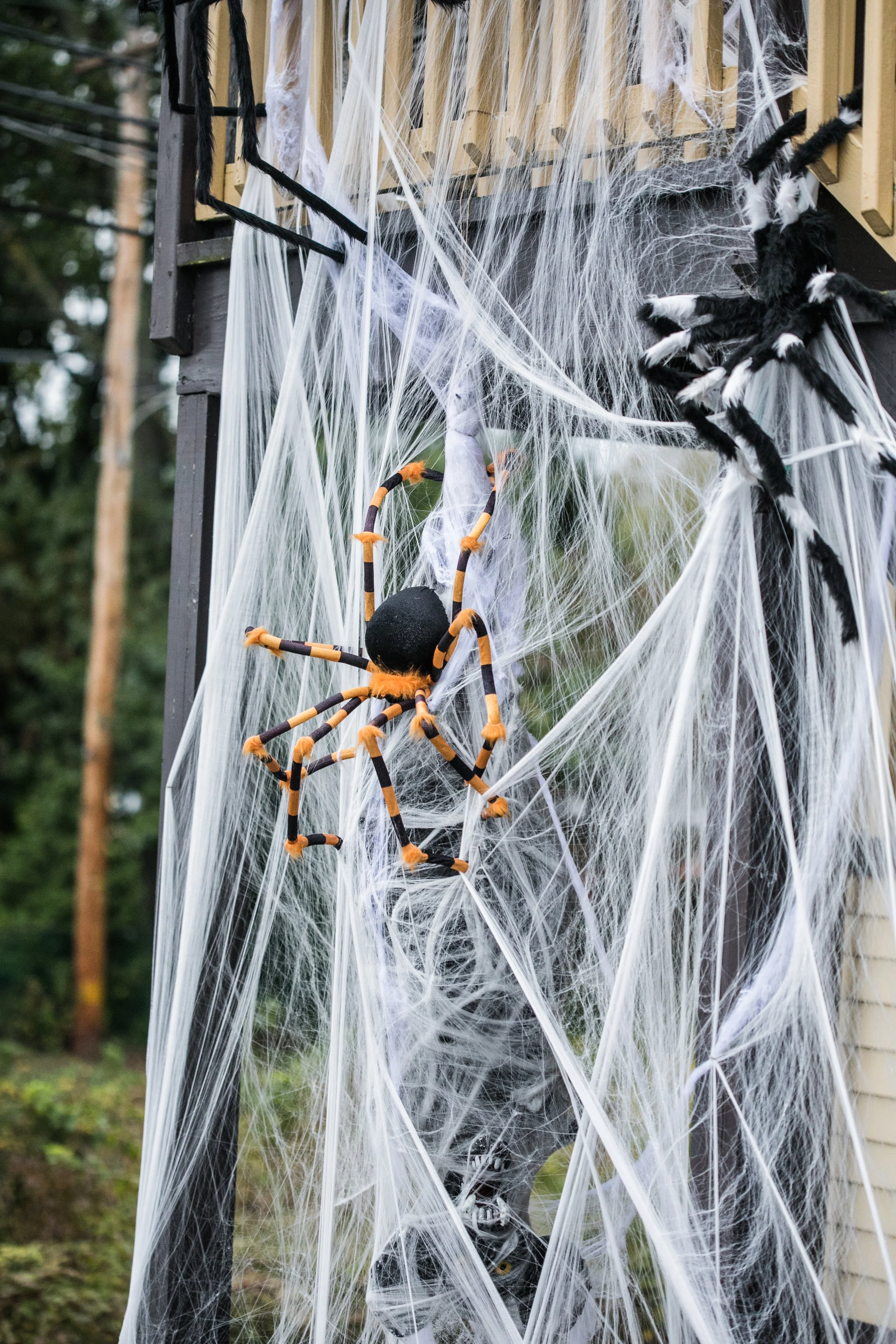
Giant spiderwebs are one of those Halloween decorations that look complicated but are actually pretty straightforward once you've done them a couple of times.
I've used them for years—and I own a lot of giant spiders. They're inexpensive, dramatic and still deliver more atmosphere than almost anything else I put outside.
Here's what I've learned.
Start With the Right Web
Store-bought stretchy spiderweb is fine, but it can look a little thin on its own. I like to give it some structure first.
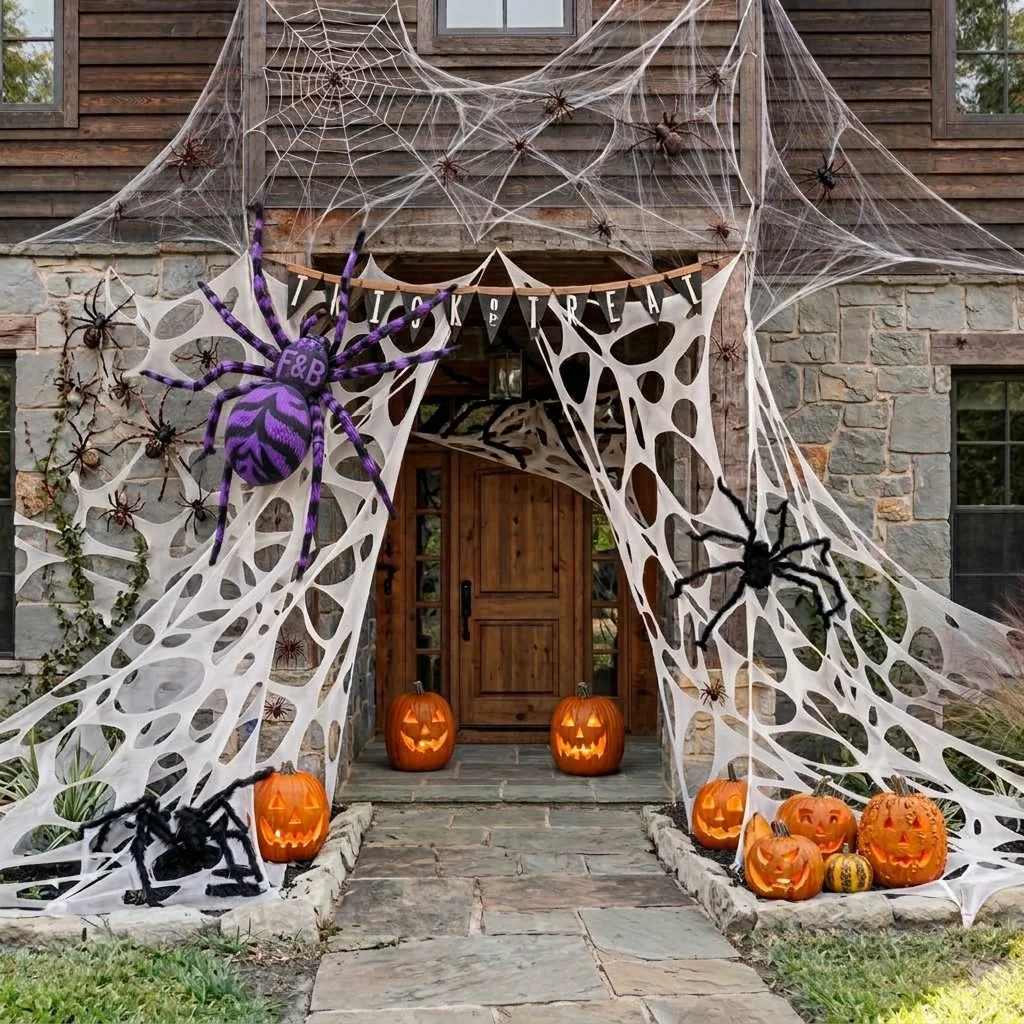
Beef netting—the stretchy netting used by butchers—makes a great base. Stretch it across the area you want to cover, secure it, and then start cutting holes into it. This is the fun part: once you start opening and stretching those holes, it begins looking surprisingly web-like.
Then layer regular inexpensive stretchy spiderweb over the top. Pull it across the netting, catch it on the openings and stretch it in different directions.
Together, the two layers create a much fuller, more dimensional web.
Go Big With the Web
Porch corners, posts, large windows, doorways and big stretches of exterior wall all give the web somewhere to spread out.
I like larger sections rather than lots of tiny scattered webs. Pull and stretch different areas, open up some spaces and leave others heavier so the finished web doesn't become one solid sheet.
And don't worry about making it perfect.
Spiders aren't using rulers.
Attach It Without Wrecking the House
Outdoor-rated adhesive hooks, Command-style hooks, zip ties and simple twist ties around porch rails can all work depending on where the web is going. For long stretches of beef netting use garden or landscape staples to attach them to grass.
The important part is finding attachment points that can hold some tension without damaging paint or finishes.
Once the main structure is secure, the lighter stretchy web is easy to catch and move around until you like what you see.
Bring on the Spiders
This is not where I'm going to tell you that less is more.
I own a lot of giant spiders.
They're relatively inexpensive, they store surprisingly well, and a whole group crawling across the house can look fantastic.
For a more realistic look, take a minute with the legs. Straighten them out and position the front legs so they're reaching forward—as though your spider has just spotted the next group of trick-or-treaters coming up the walk.
Much better.
Light It Up
A soft spotlight or string lights behind or below the web can completely change it after dark. The strands catch the light and suddenly the whole thing has much more depth.
And here's one of my favorite tricks: put a small strobe on a stationary spider.
The flashes create just enough broken movement that your perfectly still giant spider suddenly doesn't look quite so still anymore.
Scary.
Once everything is up, step back to the street and take a look. Pull a section tighter, open another hole, move a leg, add another spider.
Then enjoy it.
Big drama. Surprisingly little effort.
Did You Know?
Giant spiders have been terrorizing movie screens since at least 1955, when Tarantula sent a house-sized arachnid across the desert. In 2002, Eight Legged Freaks brought giant spiders back—with considerably more humor.
Shop the Look
We’re gathering the Frightful and Bright finds we can’t stop thinking about! When the good stuff turns up, we’ll show you where to find it.
Beef netting / butcher's netting
Stretchy Halloween spiderweb
Large fuzzy spiders
Outdoor hooks
Zip ties and twist ties
Outdoor spotlight or string lights
Small strobe light